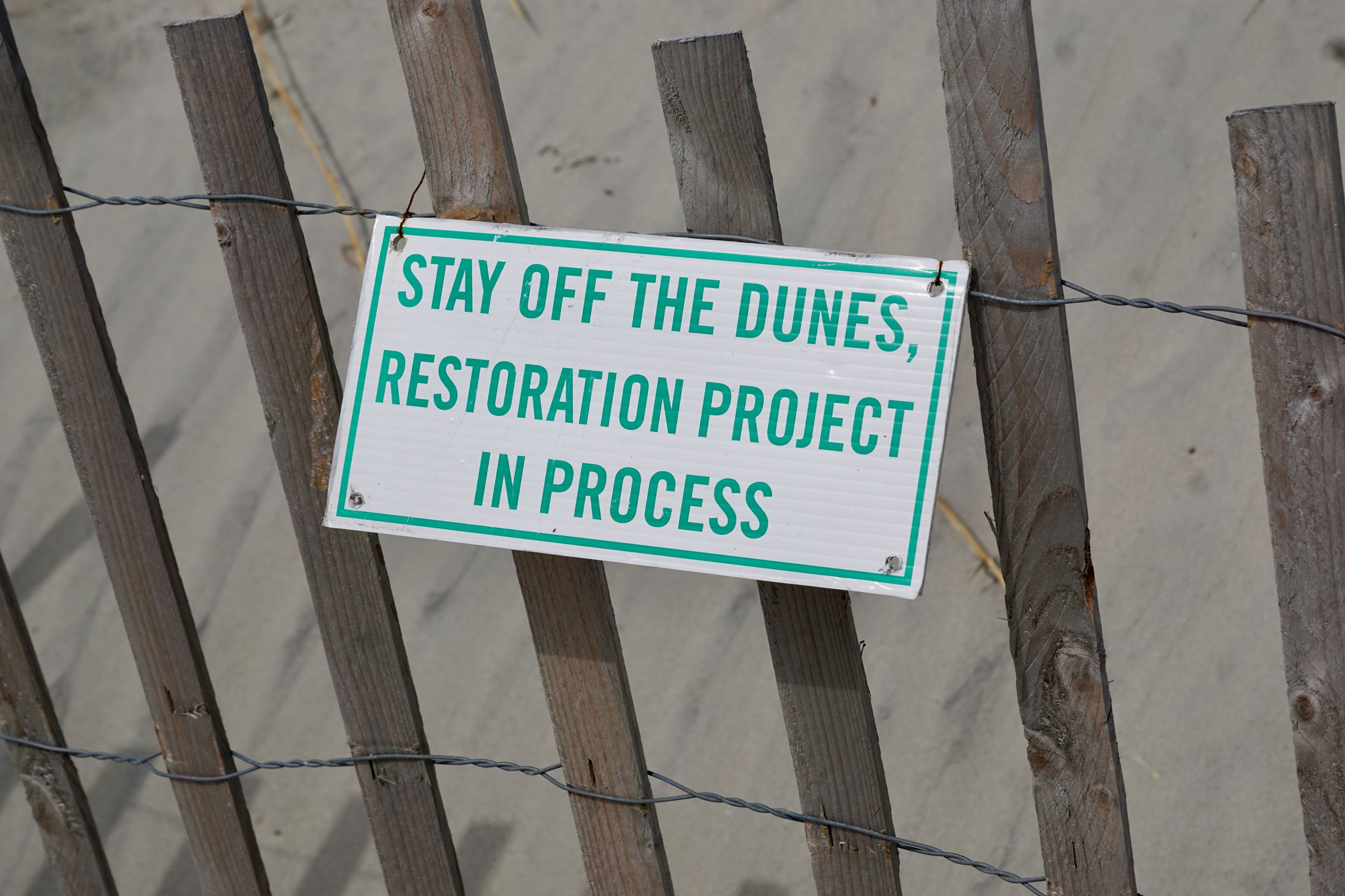
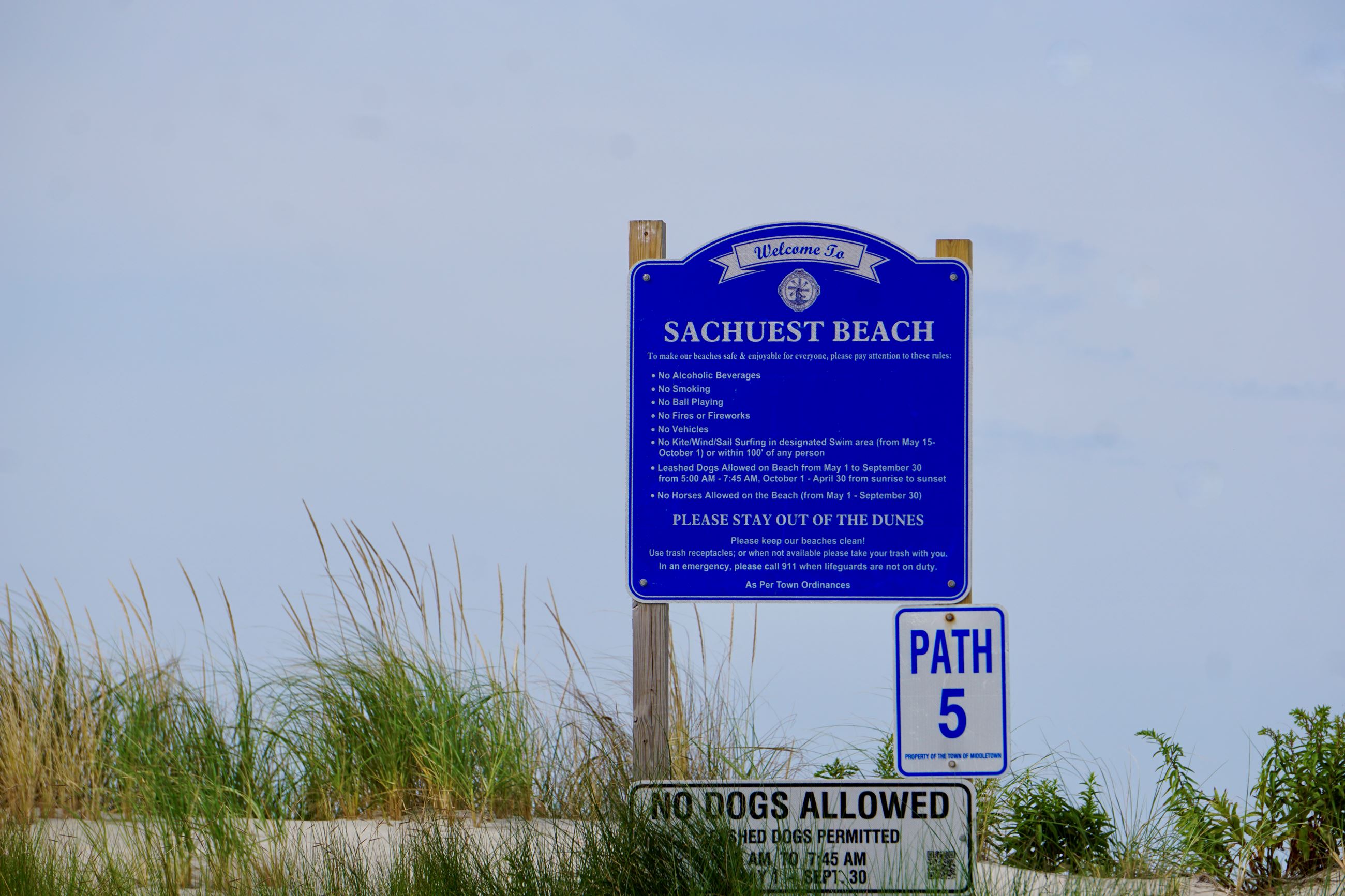
After Superstorm Sandy, the Town of Middletown was selected for federal funding to "harden" the beach area for future storms. Based on returns from Henri and Ida, the work is paying off so far.
FOR IMMEDIATE RELEASE
CONTACT: Matt Sheley at (401) 712-2221 or msheley@middletownri.com
DUNE WORK PAYS DIVIDENDS
MIDDLETOWN, R.I. (SEPT. 16, 2021) – When Tropical Storm Henri and remnants of Hurricane Ida were projected to strike, the Town of Middletown went on alert.
Motor vehicle travel through low-lying areas and by the beaches was restricted. Signs went up warning people to be careful and messaging was pushed out for everyone to stay sheltered in place.
At the same time, there was a sense of curiosity for some Town employees too, centering on the question: Would the dunes at Second Beach stand up to the wrath of Henri and Ida?
It was an important inquiry because Henri and Ida were really the first two major storms forecasted to batter the Sachuest Point Road beach since the dunes were strengthened using Superstorm Sandy resiliency money.
“If you look at the dunes, there’s no question they held up,” said Will Cronin, the Town’s Operations & Facility Manager who oversees the beaches. “With storms like Henri where it was predicted to hit during an astronomically high tide, we would have had sea water spill into the parking lot with the old layout, but not this time, thanks to the changes made through the Sandy grant.”
Every summer, tens of thousands of people from across Middletown – and the globe -- visit Second Beach to enjoy its scenic vistas, soft sand and rolling surf. Year after year, the beach is recognized as one of the nicest of its kind anywhere on the East Coast.
But when major storms hit, they can cause damage and interrupt the normal operation for days. This ends up costing the Town and the community significant revenues.
When Superstorm Sandy struck Rhode Island in late October 2012, it decimated many beachfront locations across the Ocean State. Middletown was spared major damage, minus the destruction of Sachuest Point Road southeast of the Sachuest Beach Campground.
In the wake of the storm, about $3.4 million in federal Superstorm Sandy resiliency money was awarded to harden the beach area to make it more storm proof. The Town’s Congressional delegation – led by U.S. Sen. Jack Reed – was instrumental in securing that funding.
One of the projects that resulted from that money was to beef up the dunes. In addition to acting as a buffer between the ocean and the parking lot on Sachuest Point Road, the dunes protect two Newport Water Department reservoirs in the area.
In the past during major storms, seawater would rush up the paths cut through the dunes and bring water, sand and debris with it. This would cause quite a bit of damage and mess, tying up Public Works department crews for days with the resulting cleanup, taking them away from other important work.
To combat that problem, plans were on the boards to build new structures over the dunes. As a result, patrons could access the beach, but the dune network could grow uninterrupted. Eventually, those plans were shelved after concerns were raised.
Instead, the Town opted to augment the crowned height of the paths to the beach. That way, if sea water reached the dunes, it could naturally prevent storm surges from breaching the dunes, causing erosion and depositing sand, rocks and debris into the parking lot and beyond.
This move was in keeping with a new Town strategy at the time to keep things as “natural” as possible and “leave it where it lays” instead of fighting Mother Nature.
For years, the Town removed sand from the pathways to make it easier for guests to walk onto the beach. Instead, the Town placed Mobi-mats down in each pathway to improve access for everyone, including those with disabilities.
The Town also “doglegged” the last 15-20 feet of each pathway as it led to the beach, creating another barrier to prevent seawater from rushing right through each walkway.
In the off season, beach fencing was also realigned to allow more sand to build up in each pathway to help the dunes grow and thrive.
“There are no guarantees here when Mother Nature is involved and the wrong storm at the wrong tide could cause plenty of problems for us,” Cronin said. “Saying that, so far, from everything we’ve seen, the dune work and other Sandy resiliency projects have definitely paid off.
“The dunes are the lifeblood of any beach and because of this work, our dunes have a better chance to survive and thrive than they did before. It also means less maintenance work for our beach staff, so they’re freed up to get to other important projects. When you look at it, it’s really a win-win situation for everyone.”
####