While most people focus on politics on the national level, the form of government in Middletown is where they can effect change the most quickly. Check out our new feature "How Middletown Works?" for more. #MiddletownRI
On some level, most people have a general idea how our federal government runs. Three branches — executive, legislative and judicial — checks and balances and one person, one vote.
However, when it comes to the Town of Middletown and the process on the local level, that’s where some residents aren’t quite sure how everything fits together.
Interestingly at a time when many are more likely to be involved with the expression of their opinions on national issues, the local level is where everyone can have an immediate impact.
As part of a new outreach effort, the Town of Middletown will be pushing out information about the workings of the community where they live, work and play.
In our first edition of “How Middletown Works?” we’ll take a look at the town itself and its governance. In coming weeks, education, future planning, emergency services and a range of other topics will be addressed here.
Without further ado, we bring you “How Middletown Works?”___________________________________________________________________________________________________________________________________________________________
Many people don’t realize Middletown has its own version of the Constitution.
That document — known as the Town Charter — calls the shots on everything from the form of government in Middletown to the setting of a budget, how elections are run and the handling of personnel.
Unlike the national stage where the President is clearly the most powerful person politically in the United States, the same cannot be said in Middletown.
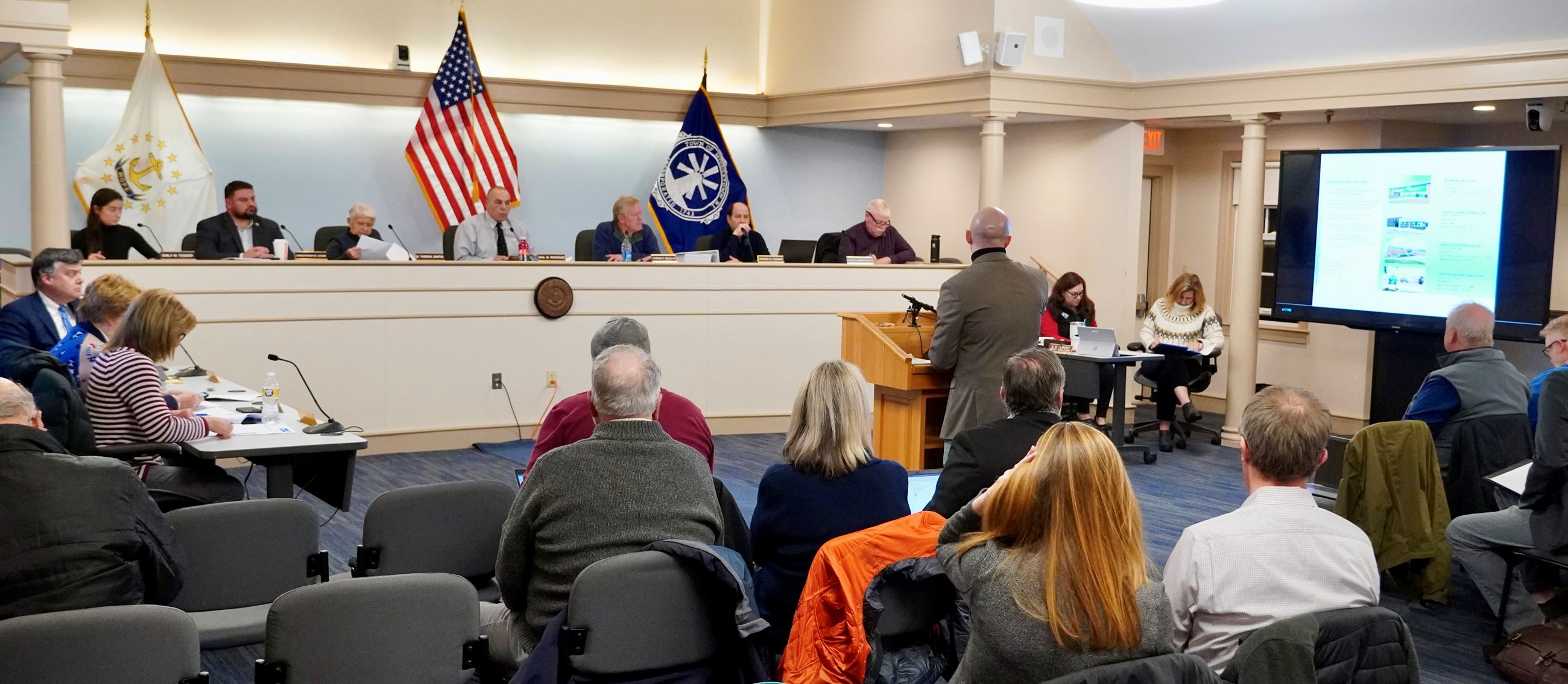
Notably, under Section 102 of the charter, the Town Council is the clear power making body of Middletown.
In one very, very long sentence, Section 102 specifies it’s up to the Town Council to run Middletown and appoint a town administrator to carry out its directives and wishes.
Article II of the charter and its 11 sections goes further into the duties of the council, its make up and overall powers, cementing its place as the main conductor of Middletown.
Some interesting facts from that article include:
- Section 201 specifies seven members serve on the council for two years without party designation. Voters approved an amendment to the charter in November 2014 making all council elections nonpartisan.
- Candidates must be registered voters in Middletown and not hold a town job or other paid public office to be eligible for the council.
- The council is required to meet at least once a month under Section 203.
- Who serves as the presiding officer of the council isn’t determined by the total popular votes during an election. Instead, it’s up to the membership of the council itself to elect a president and vice president per Section 204.
- While being a council member is like having another full-time job, it’s a labor of love for those who serve. That’s because Section 205 sets the pay for the council at $4,000 annually for president and $2,500 for the other members.
- Section 207 is among the most powerful in the charter, giving the council wide authority to run Middletown. Among those include the ability to create, change or abolish town departments, tax real estate and personal property, go out to bond up to $100,000 without a town wide vote and to enact, amend or repeal ordinances impacting the health, safety and wellbeing of the community.
- Without an annual budget, it would be impossible to get anything done as a town. Section 208 sets the process for how the budget is put together. It also requires at least two hearings for the public to review the proposed document before being okayed by the council.
- If a spot on the council becomes open, Section 209 of the charter says it’s up to the other members to select someone qualified to fill that vacancy until the next regularly scheduled state or town election.
- Section 211 of the charter plainly spells out how no member of the council should vote on items that they directly or indirectly benefit from personally. The language also makes it clearly that extends to family members as well.
In a few paragraphs, those 11 articles help provide the basis for Middletown and its governance.
What’s unsaid — but implied — is that our’s is a government of the people for the people.
Don’t believe it? Show up at a meeting and listen in on a council discussion about any number of items, whether it’s short-term rentals, roundabouts or school spending.
You’ll hear any number of opinions and voices on those subjects on the dais and in the crowd. Importantly, every voice is heard and considered before a decision is made.
And often, the decision that was expected or predicted is more nuanced and complete from the seven members of the council because of that input.
Have a question about something in Middletown? Send it to Public Affairs Officer Matt Sheley at msheley@middletownri.com and he’ll do his best to answer it in a future “How Middletown Works?”
Document Link: https://www.middletownri.com/DocumentCenter/View/6889/How-Middletown-Works----Governance
####